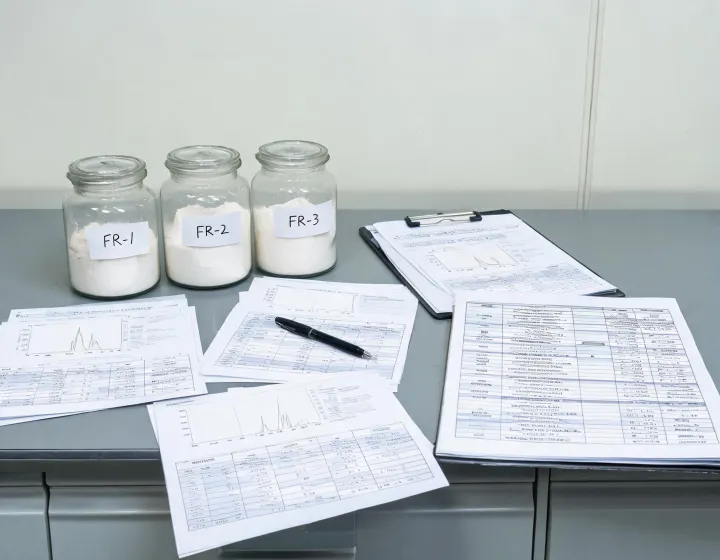
Capture the chemical identity
Record the name, CAS number when known, grade, purity or concentration, and whether the buyer needs powder, liquid or a concentrate. If finishing cloth appears later, keep that as a separate line so fabric quotes never mix into the additive row.
Lock measurable quote fields
Ask each mill to state active content, ionic type, pH, density, viscosity when relevant, and packaging. Leave blanks visible. An alternative grade goes on a new line and needs buyer approval before price comparison.
Request exact-product evidence
The current safety data sheet, technical data sheet and certificate of analysis format must belong to the quoted product. TSCA, REACH, ISO or GMP statements are questions for that supplier and lot, not credentials of Flame Retardant Sourcing.
Align delivered scope
Quantity units, Incoterm, freight, duties and sample cost stay separate until a quotation writes them. Optional budget currency and high-end, mid-range or economy preference are buyer trade-offs, not ratings we have verified.
Laboratory, EHS and formulation decisions remain with qualified parties. This page does not give mixing, storage or hazardous-use instructions. Final handling follows the exact SDS, destination rules and the carrier that accepts the UN number assigned to that concentration.
When two plants propose different particle size or moisture, we keep both answers visible instead of averaging them. The same rule applies to flash point, solids content and trace metals: the comparison sheet shows the written value, the method if given, and whether the buyer still needs a sample to confirm identity or processing behavior. Read the buyer brief before expanding the inquiry.